Dating Advice
Why Dating Apps Feel Like Games — and What to Look for Instead
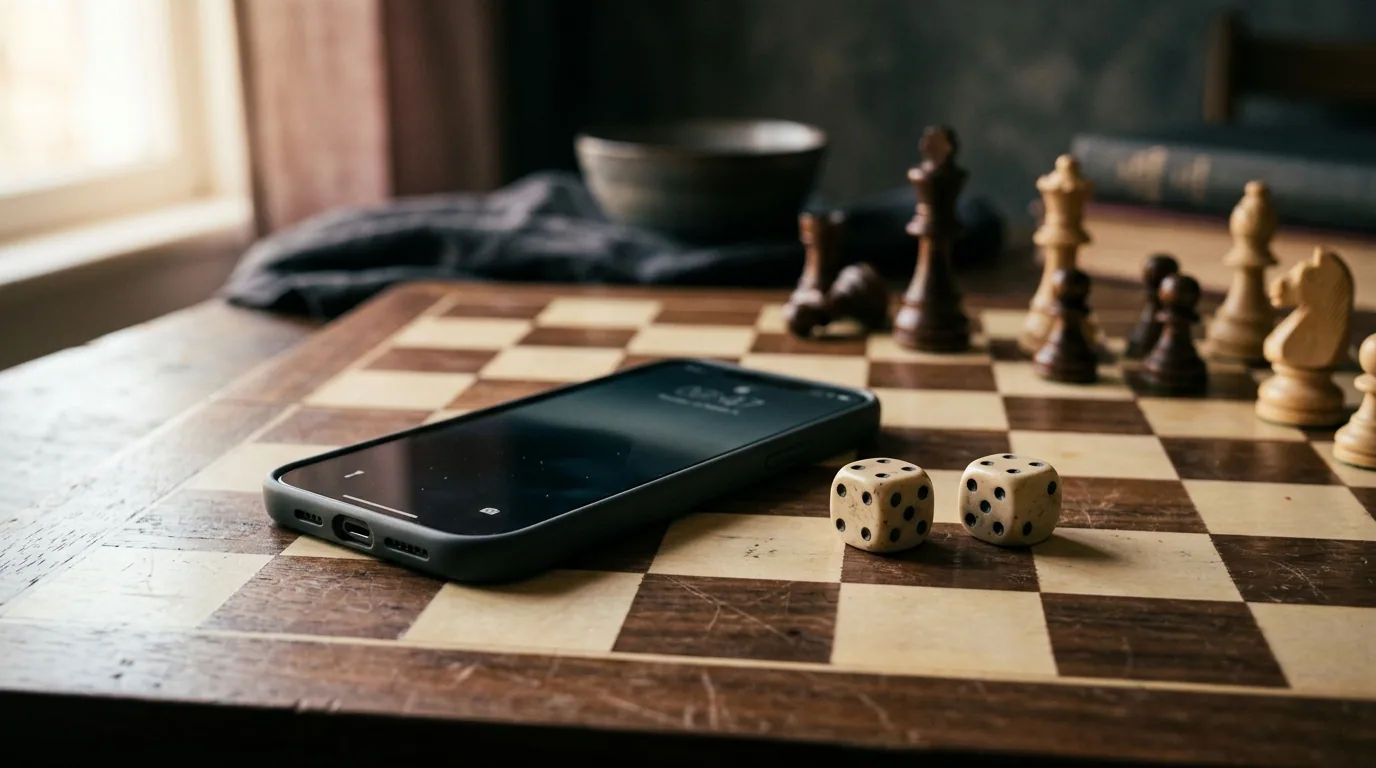
If dating apps feel less like meeting people and more like a game you can't quite win, that's not accidental. Many of the interaction patterns in modern dating apps are borrowed directly from slot machines and social media — intermittent rewards, endless feeds, and progress bars that never quite fill.
Understanding why they feel like games makes it easier to pick an app that doesn't, and to use whichever app you're on more healthily.
The mechanics dating apps borrowed from games
Variable-ratio reinforcement. Slot machines pay out on unpredictable schedules — that unpredictability is what makes them compulsive. Swiping through profiles works the same way: most are misses, occasional matches feel disproportionately rewarding, and you keep swiping to find the next one.
Streaks and daily goals. Some apps prompt you to log in every day. This is a growth pattern from mobile gaming, not something inherently useful to your dating life.
Infinite scrolling. The design assumption is that if you stop, you'll leave. So the deck never ends. There's always one more.
Notification triggers. Someone liked you. Someone viewed you. Someone matched. Each buzz pulls you back in.
Premium tiers with FOMO framing. "See everyone who's liked you" only works as a hook because you're not shown the answer for free.
None of these mechanics are evil. They exist because they work — users engage more, stay longer, sometimes pay. But engagement isn't the same as helping you find a relationship. Those goals can conflict, and often do.
What "game-y" dating apps do to you
- Match dopamine, no follow-through. You match, feel briefly good, never message. Repeat.
- Optimization creep. You start swiping strategically ("I need to A/B test this photo") instead of dating.
- Burnout. The same reward system that keeps you swiping also makes each individual match feel less meaningful over time.
- Cynicism. Not because dating is bad, but because your daily interaction with dating has been abstracted into a game where nobody wins.
If any of this feels familiar, the app is doing what it's designed to do. You're not weak-willed. You're using a tool that was designed to be sticky.
What to look for instead
Not every dating app leans into game mechanics. The ones that don't tend to share:
Volume constraints. A daily limit on likes, or a curated set of profiles rather than infinite scroll. When the deck has a bottom, the swipe stops feeling like slot machines.
Two-stage decisions. Meet to Keep, for example, separates the initial "I'd meet this person" decision from the later "this is worth pursuing" decision. Splitting these keeps the first decision from becoming the whole product.
Depth requirements. Apps that require real profiles from users (prompts answered, questions filled in) automatically slow the interaction pattern.
No streak mechanics. No "log in every day" prompts. No progress bars. No push to engage on the app's schedule.
Fewer, better notifications. An app that notifies you only when something meaningful has happened is respecting your attention. An app that finds reasons to buzz you is training you.
The larger frame
The category name matters. Most dating apps are still described in terms of their game-like features — "swipe," "match," "hot or not." Apps trying to differentiate around intent tend to use different language: meet, keep, connect, compatibility.
That's not just branding. When product teams describe their app in game terms, the design decisions follow. When they describe it in relationship terms, the design decisions look different: fewer profiles per day, deeper content per profile, more emphasis on the moment where two people actually decide to meet.
Meet to Keep is one attempt at that. Not the only one. But the frame — dating apps as tools for producing relationships worth keeping, not games optimized for swipes — is the thing worth looking for regardless of which app you pick.
What to do if your current app feels like a game
- Turn off non-essential notifications. Keep messages; kill the rest.
- Set a time budget. Ten focused minutes twice a day beats an hour of ambient scrolling.
- Read profiles fully before deciding. Slows the reinforcement loop.
- Move to a first date faster. The swipe rewards attention; the first date pays off.
- Consider whether the app itself is the problem. If the mechanics are the frustration, a differently-designed app will feel different by design.
Dating apps aren't inherently games. Some are designed like them. The category is quietly separating into apps that keep you playing and apps that help you stop. The one you want is the second kind.
Want a dating app built around helping you meet someone worth keeping, not endless swiping? **Explore Meet to Keep**.
Ready to date with intention?
Meet to Keep is built for people looking for meaningful, relationship-minded connections — not endless swiping.
Discover Meet to Keep